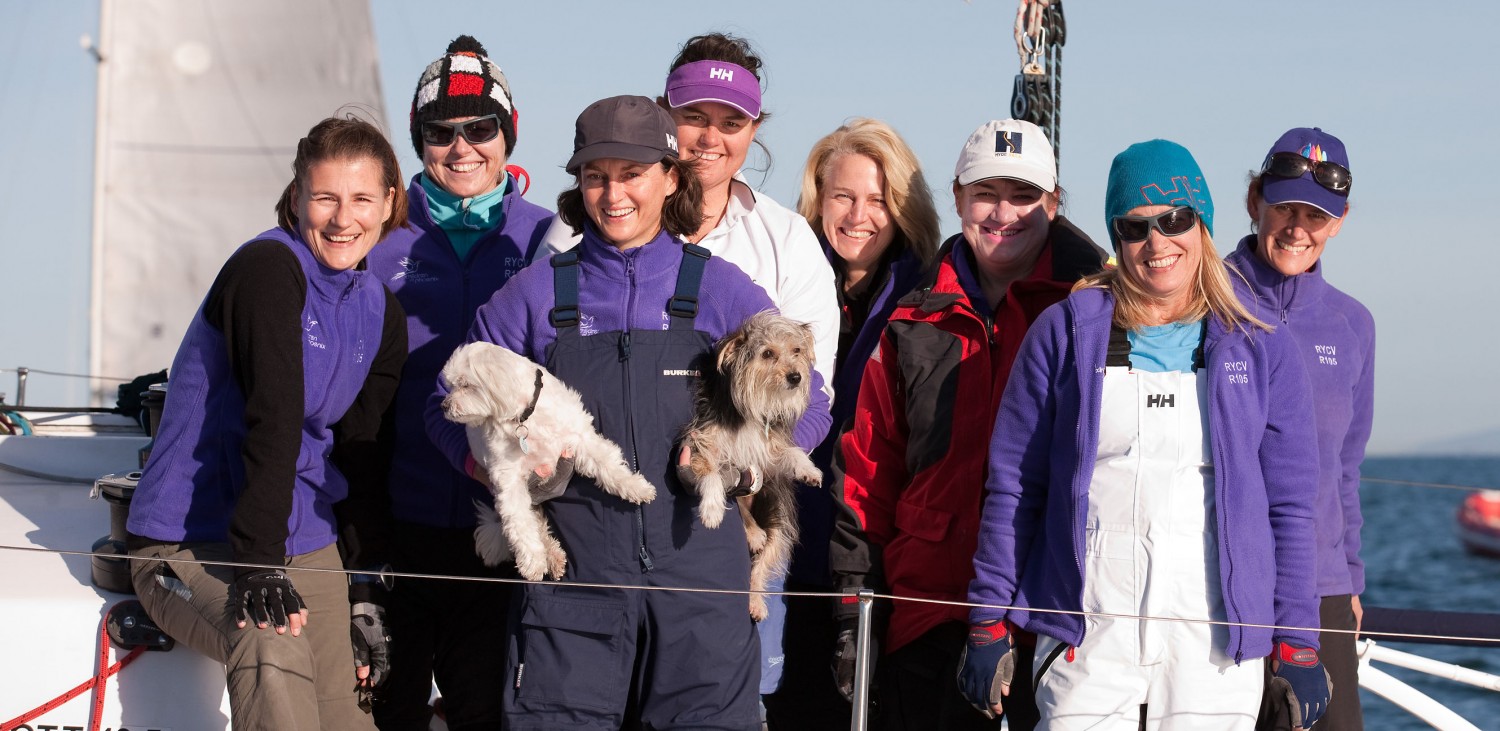
Monday 15th June 2015 – Refuge Cove
 Yay for Telstra’s offshore mobile coverage – it allowed Ian to give as some helpful onshore navigation tips. Based on the easterly winds, we decided to pull into Oberon Bay on the western side of Wilson’s Prom rather than going around to Refuge Cove. Arriving at 4:00am, Richard was frustrated to find the windlass jamming, meaning it needed to be pulled apart to deploy the anchor manually. Once secured we slept soundly for a few hours before running our stowaway crew member ashore at dawn in the inflatable, so that he could walk out of the Prom and get a lift home. Some more tricky moments for Richard manoeuvring the dinghy between rocks with a challenging swell and breaking waves but David was successfully dropped ashore – he may have got a bit wet in the process. We then decided to head around to Refuge Cove after all to avoid the south-westerly swell. The wind was already up to 20knots as we headed out, so it was a bit of lumpy bumpy ride until we could tack across and get around the corner. Refuge came up so quickly and was so much smaller than we expected that we almost sailed past it – luckily Richard was honing his nav skills and called us in. We anchored at dusk with the same windlass issue and more frustration for Richard. We eventually got settled, heated up a meal and settled down for an early night.
Tuesday 16th June 2015 – Things that go bump in the night
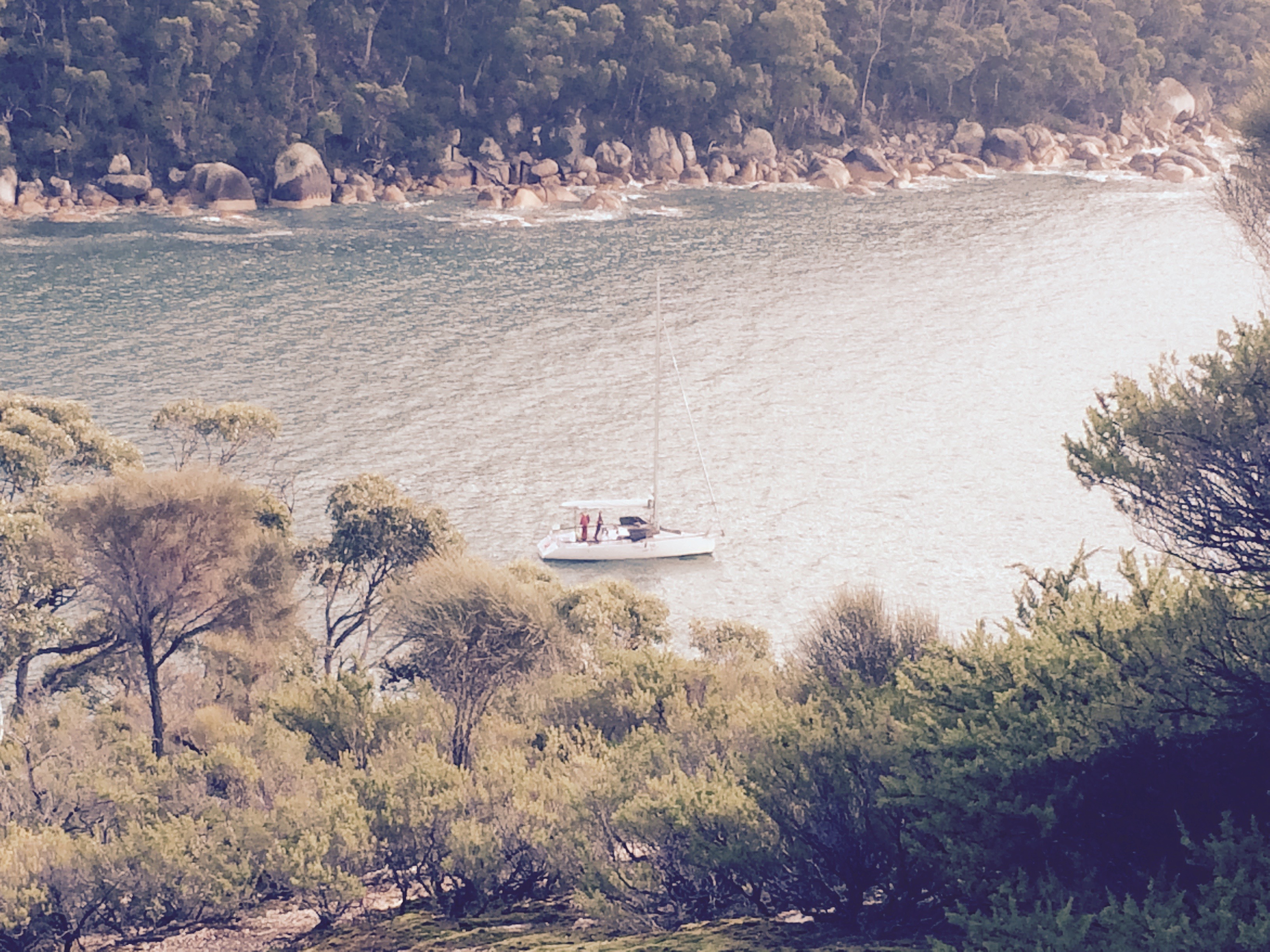 In our efforts to deal with the anchor last night we (I) neglected to check the tide. We had dropped the anchor in plenty of depth. But by the time we motored backwards towards the shore to make the anchor stick, we were in shallower water. When the tide dropped by 1.5m during the night, we were awoken to feel the boat bouncing on its keel. I quickly donned sailing gear over pyjamas to go up and start the motor. The swell was rocking us so much that it was a pretty easy affair to wait for the boat to tilt then motor off. We pulled up on the anchor into deeper water and settled back into our bunks. Unfortunately pulling up on the anchor meant not enough chain was left deployed and we dragged, once again awaking to tell-tale bumps around 5:00am. We motored off once more and dropped the pick again – this time successfully and in deeper water with plenty of chain.
A lazy sleep-in followed, surfacing to put the kettle on around 8:30am. After breakfast we all went ashore in the dinghy to explore the trails through the bush and see if we could get some phone coveragein a more elevated location for a weather update. Ian’s advice when we did get through was to have gone that morning, but by the time we trekked down to the boat and packed up ready for a 2-day trip, it would have been late afternoon before we left. That would have meant sailing 2 nights; I was keener to leave at dawn the next day and have 2 days sailing and only 1 night. The forecast for leaving at dawn wasn’t as favourable but seemed ok; 25-30knots from the south east for a few hours in the evening, 20-25 for the rest of the trip, which should have been a fast reach aft of the beam with an apparent wind speed feeling significantly lower. I wouldn’t take the boat out on the bay to race in winds that strong, but doing an ocean leg in one direction with 2 reefs in the main and just a small amount of headsail deployed should be comfortable enough. We talked it over and agreed that we would go with that window.
Wednesday 17th June 2015 – A day we’d rather forget
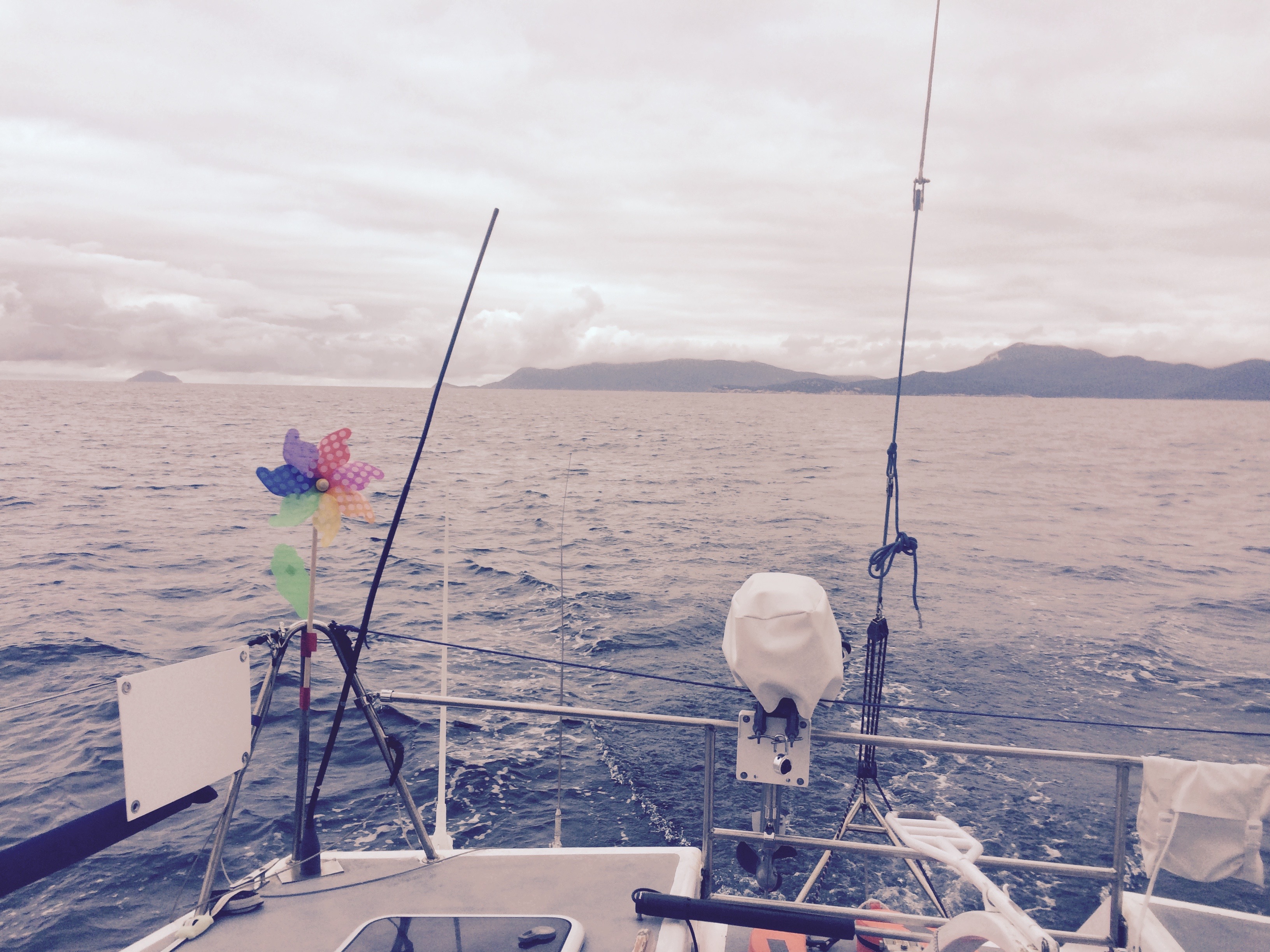
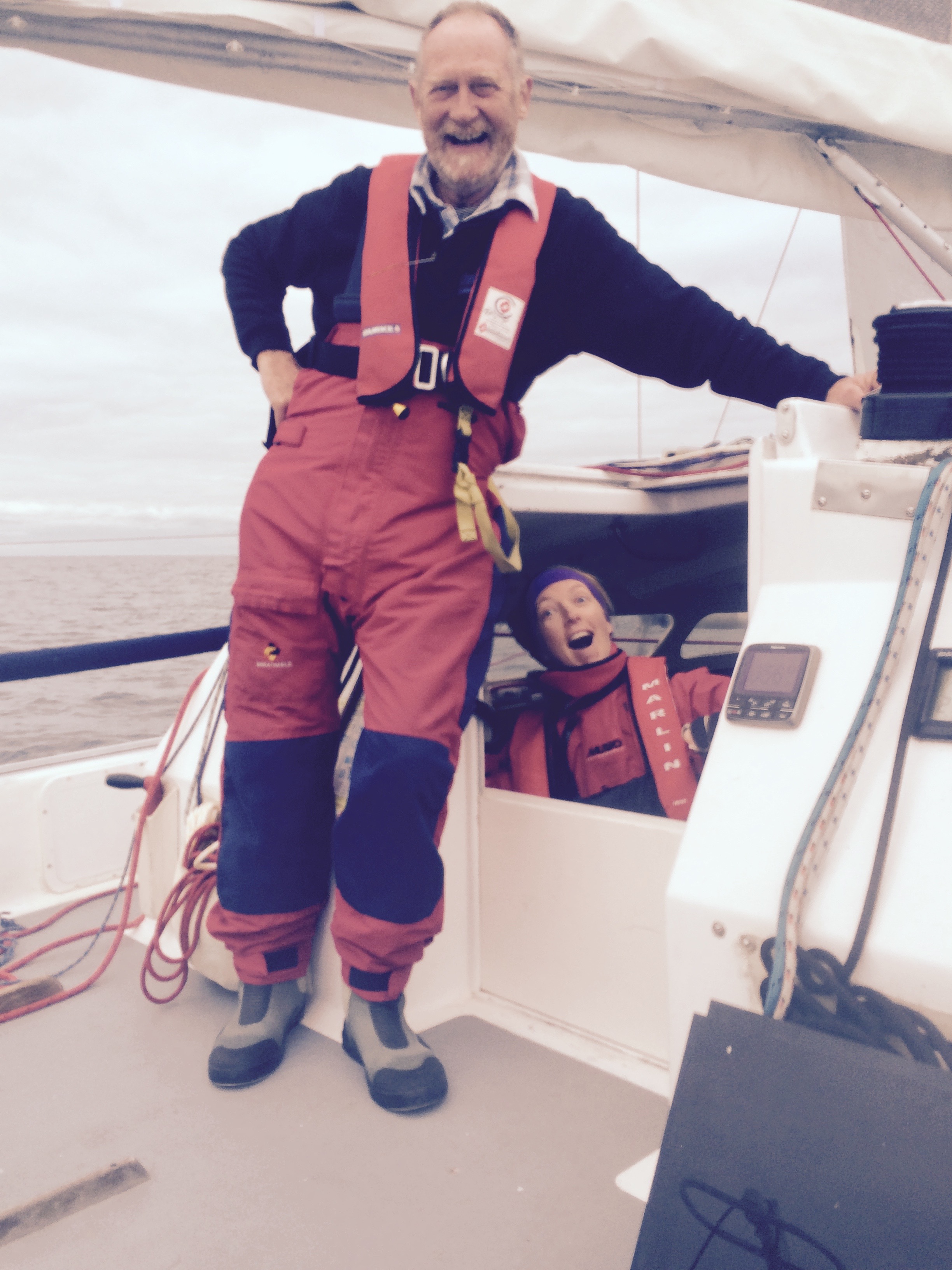 Despite waking every 5 minutes during the night worried we might be dragging anchor again, the boat stayed put and we rose just before dawn to feed up on a big breakfast of porridge and fruit before heading off. As we left Refuge Cove I got coverage again and a message from Ian advising that the 25-30knots were now forecast to last all night. We were all keen to get going, and having decided the direction meant the wind strength wouldn’t be a problem, we elected to continue. As we headed out for a very pleasant sail past Seal Islands towards the beginning of the oil rig fields the colorful whirly-gig nick-named ‘the fun generator’ was going full speed and the crew were feeling chirpy. Belinda getting some time on the helm and quickly learning to steer a straighter course. At 15knots we put the first reef in the mainsail and furled the jib slightly. An hour before dusk, the second reef went in and the jib was furled a bit more; increasingly so as the wind built to 20, then 25, then 30knots. The swell was too big and the seas too messed up for the autohelm to work effectively; it would have to be Richard and myself hand steering all night. I sent him downstairs to rest while I took the first shift, hoping that I could do a long stint before calling him up and that the wind might even prove closer to the original forecast and abate after a few hours.
At about 7:00pm, the wind had built even further, a steady 30-35knots and gusting to 40. Just as I was thinking that the boat was handling it well, a loud bang was followed by a flogging headsail; I was worried the forestay had gone and steered a course downwind both to stop the flogging and protect the rig while Richard and Belinda quickly dressed to come upstairs. The furling line had broken; the headsail was fully deployed with no way of re-furling it. It would be impossible to sail any direction other than downwind with that much sail area in strong winds, which would have had us on the coast (rocky shoreline) within a few hours. There was no choice; the sail would have to come down. Sending two people forward to the bow in 40knots and big seas to pull down a sail that was flogging madly and stiff in the track is one of the hardest things I’ve ever had to ask of anyone in my life. It’s the reason I purchased the furling headsail in the first place; to avoid needing people on the bow dropping sails in dangerous conditions. I’d purposely ordered the sail in heavy material, designed to be bullet proof. Normally a full-sized headsail would be used in light winds and made of light fabric, but I wanted this one to be usable in the ocean in any conditions. Good in theory, but the weight and stiffness of the sail combined with its vertical battens now made dropping it even harder. With the motor on full throttle trying to keep the boat head to wind into the waves, I thought of the tokens of St George that a colleague had given me to bring on the trip – her faith in his protection was to be her farewell wish as we set out on our adventure. The courage and strength of Belinda and Richard won out and they managed to get the sail down and secured and came back off the foredeck. They were drenched, cold and tired after riding a roller coaster on the bow with waves crashing over them for 5 minutes. The boat was well under control again so I sent them downstairs to do what they could to get warm and rest again. Conscious that if we lost our navigation instruments in these conditions we would be in a more serious situation, I left the motor running for a while to help drive through the seas and recharge the batteries.
Our troubles weren’t over; half an hour later the motor clunked and stopped. In the dark I hadn’t seen that a rope on deck had been washed free and was trailing in the water… until it wrapped itself around the propellor. There would be no more motor assist and we would be arriving at Eden in the dark, needing to find a mooring, drop an anchor or pull up to the jetty under sail. The boat speed was still good – 7 – 10knots, so I shelved the new problem to be dealt with later, hoping that the mainsail would remain in tact over night and not leave us with no sail and no motor. Rigging the storm sails in these conditions was not something I wanted to have to ask Richard and Belinda to do. As it was, they both pulled superhuman efforts; Belinda going 40 hours with virtually no sleep, watching the nav station like a hawk for oil rigs, shipping traffic and other boats and making sure we were staying on course with our manual steering as we tired and our concentration failed. Richard and I were doing 90 minute shifts each, curling into a ball downstairs in our off-shift as Belinda covered us with sea blankets and fed us muesli bars and nuts and water. Both dawn and Gabo Island never seemed to get any closer through a very, very long night.
Friday 19th June 2015 – Safe harbour, all is well
At some point during Thursday the wind finally began to abate although it was still gusting to 25knots. But our boat speed had slowed down considerably and we were struggling to make more than 3 – 4 knots headway into the current and swell. The wind was finally aft of the beam (only just), so we shook out the second reef and immediately picked up to the handy 7 – 10knots that Children of Phoenix does so easily once she comes away from the wind at all. I actually managed to have a pleasant two hours drying out in the afternoon sun, catching some waves and surfing down the back of them at 12knots, enjoying the feel of the boat. Once around Gabo, Eden was still a long way off and our aim of avoiding a second night sail wasn’t to be realised. We sailed into Twofolds Bay around 2:00am on Friday morning and managed an uneventful docking under sail at the well-lit mooring jetty in Snug Cove. Belinda promptly thawed out a chicken green curry and at 4:00am with tummies full of hot food we all collapsed into our bunks, dry and warm at last.
Later that morning we found a diver from the slipway to cut the offending rope away from the propellor and he reported no sign of damage to the propellor. The furling line would have to be replaced – it had snapped in the middle and there wasn’t enough length remaining for it to be usable. The head of the sail had also detached from the top furling drum – probably the shackle snapping as it unfurled. The halyard was still up the mast – someone would have to go up to retrieve it. I would deal with that in the afternoon, or maybe tomorrow; for today, we all just needed to sleep, eat and recover.
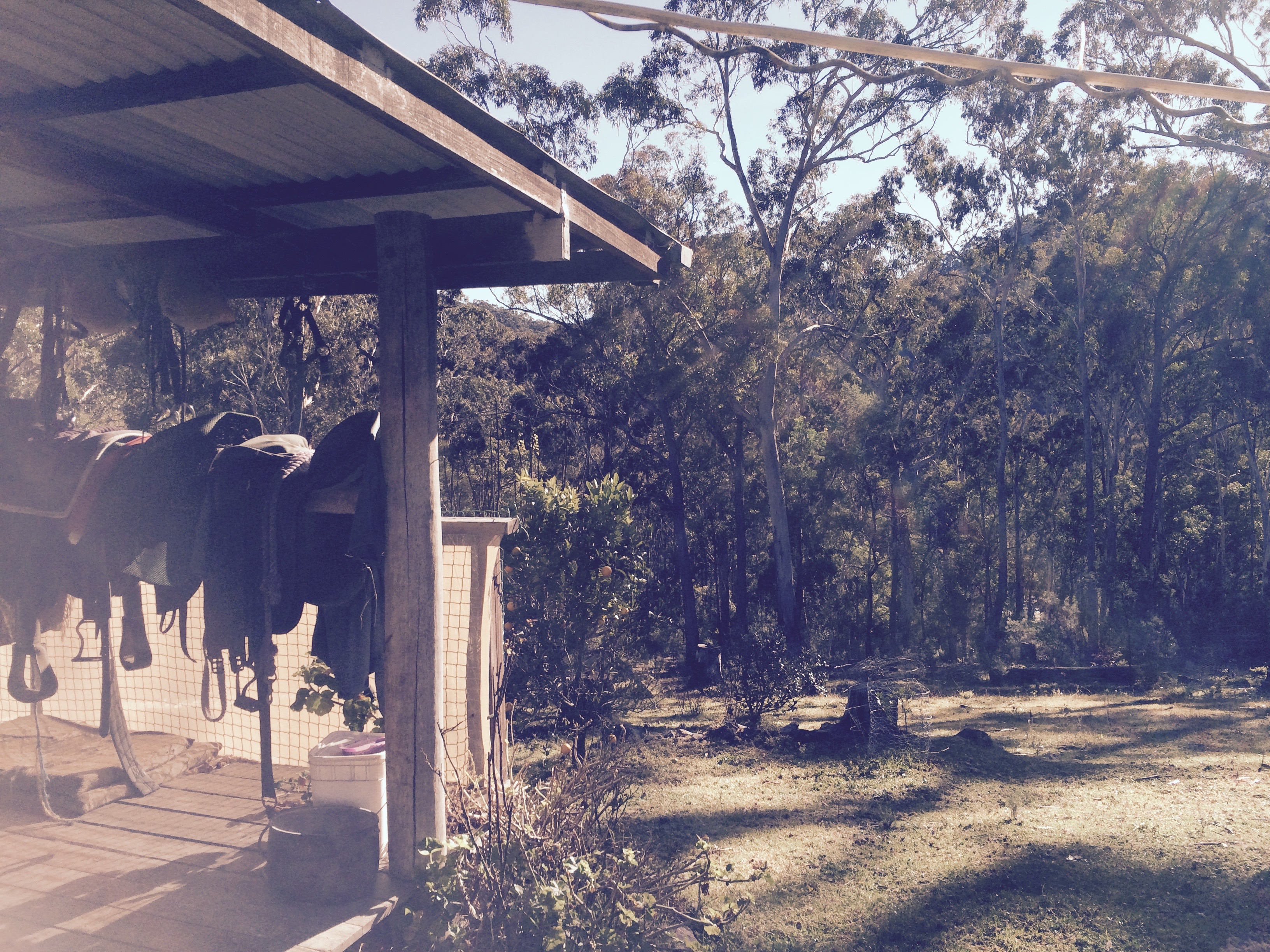
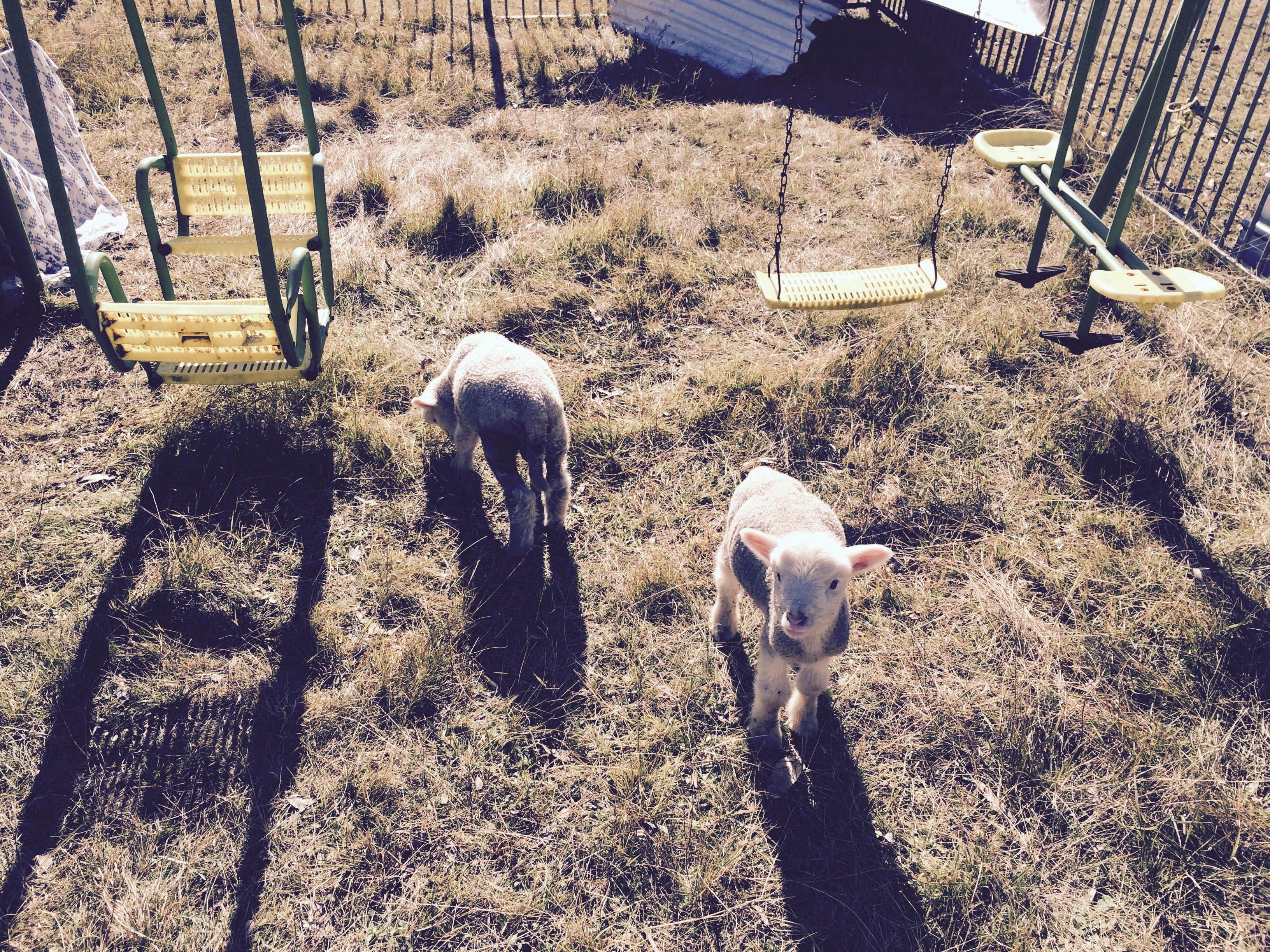 Many lessons were reinforced that should have already been well and truly learnt long before an experience that none of us ever want to repeat; be more selective in weather window selection, leave the headsail furled in strong conditions, if the motor is running make damn sure there are no lines in the water. But some positive new lessons as well; the boat handled the conditions well and each of us now has confidence in the others that under pressure, we all were able to stand up and do what was needed to bring us safely home. We will stay put in Eden until we’re all fully recovered and the boat is dry and ready to go again. The next leg will probably be a short day hop, perhaps to Bermagui. We will be ultra-cautious about the forecast we choose to go in. It’s important that the next experience is a positive one – if we have to wait a week or more then so be it. The forecast is for a northerly shift on Monday so it will be at least Wednesday before there’s a favourable window. In the mean time, we’ll visit Pete on his bush block, explore Eden and prepare the boat and ourselves for the next legs.
Tuesday 23rd June 2015
The boat is dried out and after a few days at Pericoe spirits are up and we’re back on board. The forecast is for strong northerlies up the Eden coast until at least Thursday so we’re here for a few days yet. We’ll use the extra time to sort out the satellite phone and other electronics to make sure we can get weather reports when there’s no phone coverage and do some other odd jobs on the boat. The new furling tape will arrive from Melbourne today or tomorrow, so hopefully we’ll be good to go on Thursday or Friday if the forecast is good. A young Belgian backpacker thinks he’s keen to join us; we’ll try to get out for a sail on the bay here if it’s protected enough over the next few days, to give him a taste of what he’d be in for before taking him out on the ocean. Is it sane that I’m itching to get going again?
1 comment for “Crossing the paddock…”